Quick Answer
Half set lash extensions use fewer placements than a full set. Some salons apply extensions mainly through the outer half of the lash line, while others distribute lighter coverage across more of the eye. Because the term is not standardized, the consultation should define the coverage, map, expected finish, appointment time and fill policy before application.
| Half-set model | Placement approach | Typical visual goal | Inventory direction |
|---|---|---|---|
| Outer-corner half set | Focus on the middle-to-outer zone | Elongated, subtle lift | Classic singles or light fans in controlled lengths |
| Distributed light set | Fewer suitable lashes across the line | Soft definition without full density | Mixed classic tray or light-volume tray |
| Event/express set | Limited, clearly defined coverage | Shorter service with a specific finish | Small core range; no oversized menu |
The salon should name the model in its service description. “Half set” without a coverage definition can create inconsistent expectations between artists and clients.
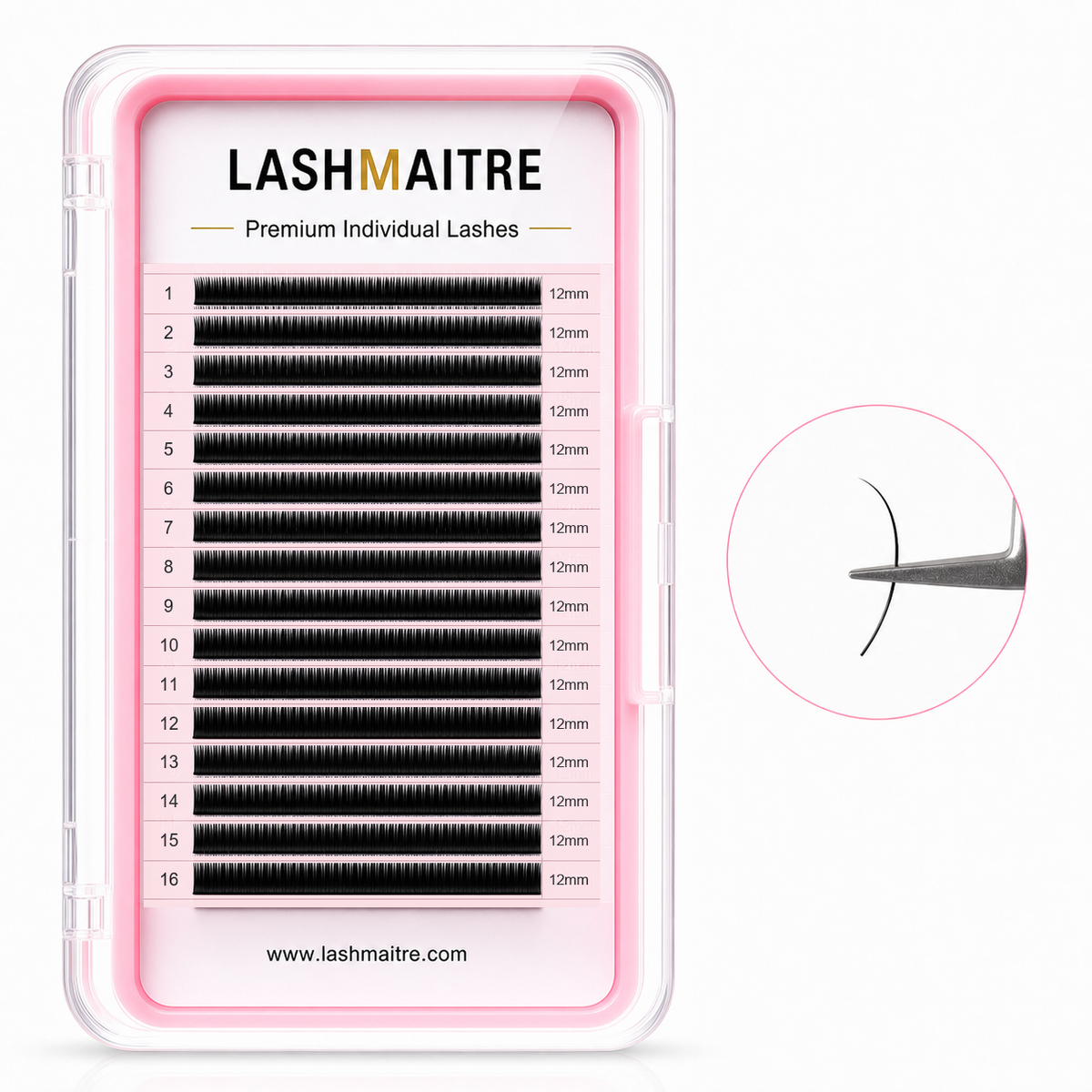
Table of Contents
- Half set vs full set
- Outer-corner vs distributed maps
- Classic vs light-volume products
- Curl and length transitions
- Timing, fills and service policy
- Inventory worksheet
- FAQ
What Are Half Set Lash Extensions?
A half set is a reduced-coverage lash extension service. It may involve working with roughly half of the suitable natural lashes, concentrating on the outer portion, or creating a lighter pattern across the lash line. The exact percentage is less important than documenting what the salon actually delivers.
Public service descriptions illustrate this variation. Some define a half set as outer-edge classic extensions, while others describe fewer lashes across the line. This is a market-language example, not a technical standard. A salon should state its own coverage in plain language and show a representative map.
Half Set vs Full Set Lash Extensions
| Factor | Half set | Full set |
|---|---|---|
| Coverage | Reduced or zone-specific | Broader coverage across suitable natural lashes |
| Visual result | Subtle, light or outer-focused | More continuous definition and density |
| Consultation need | Must define what “half” means | Must define style, density and map |
| Product use | Lower, but highly map-dependent | Higher, with more lengths and zones used |
| Maintenance | Gaps can become visible in a concentrated zone | Shedding appears across the full map |
A half set is not automatically half the time or half the price. Consultation, preparation, mapping and final separation checks still take time. The salon should price the service from its real workflow rather than applying a simple 50% discount to the full-set menu.
For clients choosing between service types, the Classic vs Volume Lash Extensions guide explains the main product formats.
Outer-Corner Map vs Distributed Light Coverage
An outer-corner map places most of the visual emphasis from the center toward the outer zone. It can create a soft wing or kitten effect, but the longest point should not automatically sit on the final outer lashes. If those lashes are finer or angle downward, a shorter taper may create a more balanced finish.
A distributed light set places fewer extensions across more sections. This can look more even as it grows out, although the result depends on the client's natural density. Define the placement rhythm in the salon map—for example, the artist may work with selected suitable lashes rather than every lash.
Use the Cat Eye Volume Lash Extensions guide for outer emphasis and the Eye Shapes for Lash Extensions guide for consultation variables. Do not copy either map unchanged.
Classic vs Light-Volume Half Sets
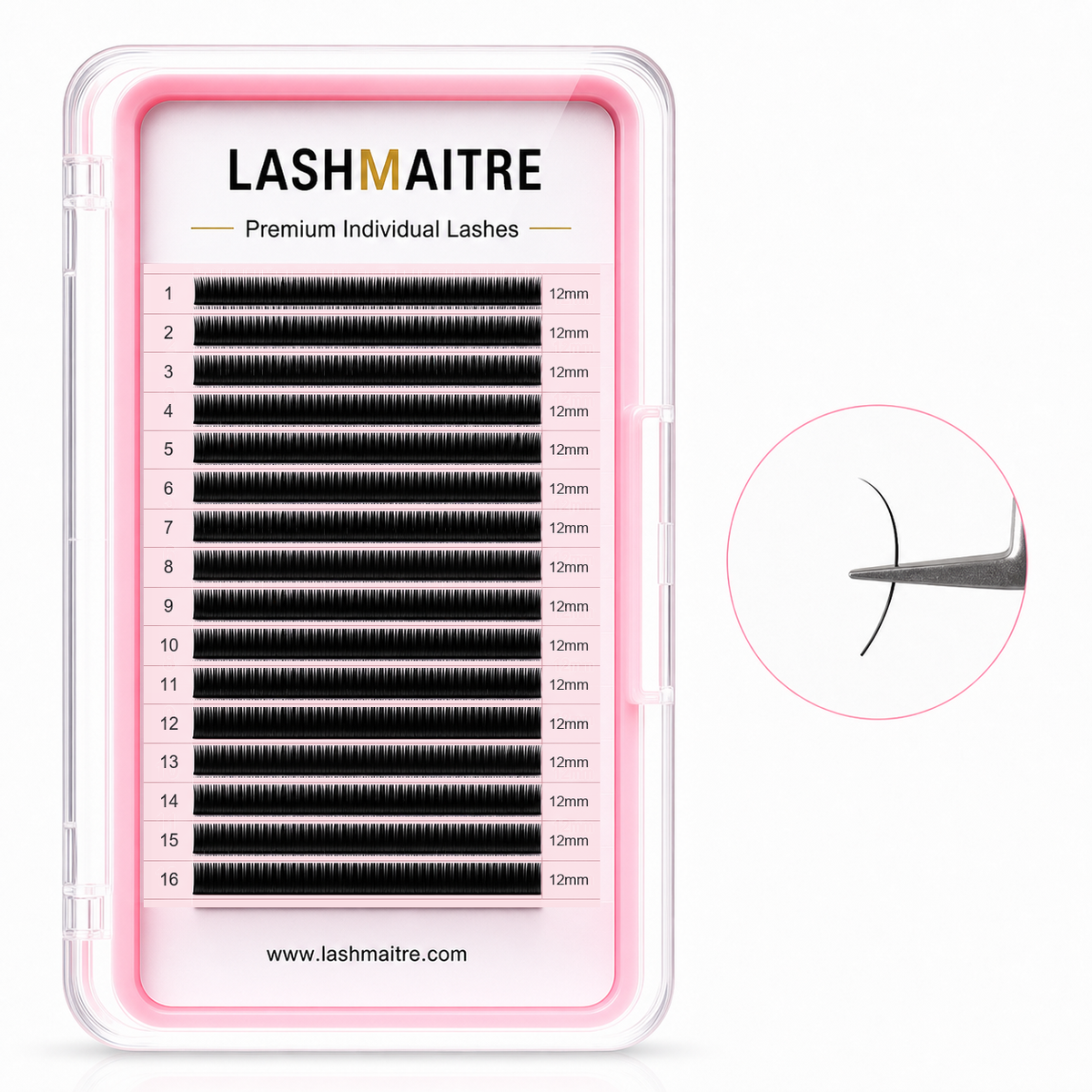
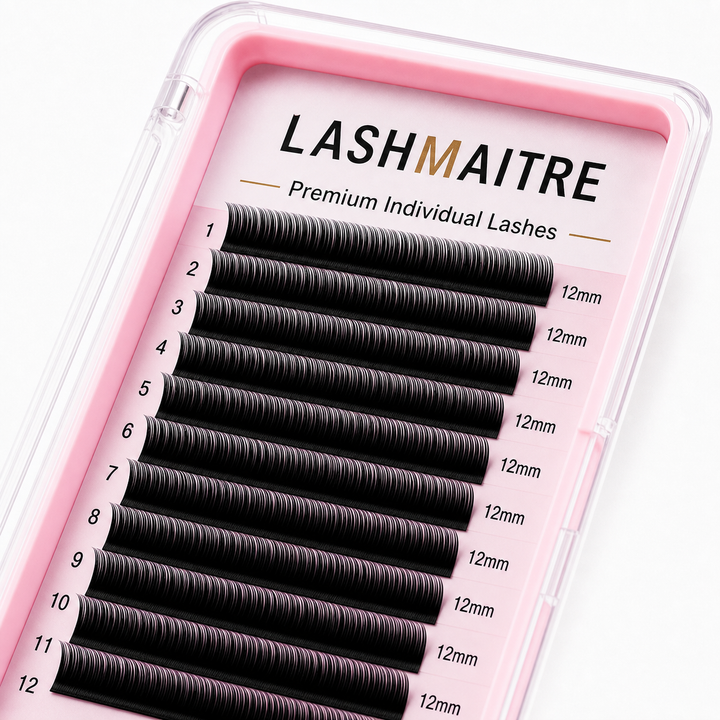
Classic singles provide separated definition and are a logical starting point when the service promise is natural and clean. Browse Classic Lash Trays and select curls and lengths already used in the salon's full-set menu.
Light-volume fans can add texture where natural density is uneven, but they change the service description. If the menu offers both Classic Half Set and Light Volume Half Set, state the difference in coverage, fan format and visual density. Avoid using one generic photo for both.
From an inventory perspective, a half-set menu should reuse the salon's approved core trays. Creating a unique curl-length catalog only for a lower-volume service usually adds unnecessary stock complexity.
Curl and Length Transitions
A successful half set needs a deliberate transition into and out of the emphasized zone. Starting too long can make the middle look disconnected. Ending with the longest fibers on the last outer lashes can make the edge look heavy or uneven.
Use at least three length zones in the map: entry, build and taper. The exact millimeters must be adjusted to the natural lashes and eye area. The 8–15mm Lash Extension Length Chart can support tray planning, but it is not a universal application map.
Curl should also remain consistent with natural-lash direction. When the service uses a stronger curl or a special curl only in one zone, compare the profile at the transition so the set does not show an abrupt step.
Service Timing, Fills and Client Expectations
Publish a clear policy before adding half sets to the booking menu:
- Define whether the service is outer-corner or distributed coverage.
- State whether it uses classic singles, fans or a hybrid format.
- Give a realistic appointment range based on salon testing.
- Explain whether half sets can receive fills.
- Define when a full set is required instead of a half-set fill.
- Use photographs that show the actual coverage from the front and side.
Concentrated outer-corner sets may show gaps differently as natural lashes shed. The Lash Fill vs Full Set guide can help the salon explain maintenance without promising identical retention for every client.
A Half-Set Inventory Worksheet
Track the first 10 services before expanding the menu:
| Field | Record |
|---|---|
| Service type | Outer-corner / distributed / hybrid |
| Product format | Classic / light volume / mixed |
| Curl and diameter | Exact tray labels |
| Lengths used | Rows used and approximate consumption |
| Appointment time | Consultation through final check |
| Fill outcome | Time since service and usable remaining work |
| Client feedback | Desired change in length, curl or density |
After 10 services, compare the actual tray usage with the price and appointment time. This produces a more reliable purchasing decision than estimating from one model set.
Safety and Suitability Boundary
Reduced coverage does not remove the need for professional assessment, clean tools, ingredient awareness and careful eye-area work. The U.S. Food and Drug Administration classifies lash extensions and their adhesives as cosmetic products and advises consumers to check ingredients and stop use if irritation occurs. Review FDA Eye Cosmetic Safety.
A literature review in PubMed Central documents reported ocular adverse effects associated with eyelash extensions. It supports a cautious professional boundary; it does not prove that a half set is universally safer than a full set. See Eyelid Cosmetic Enhancements and Their Associated Ocular Adverse Effects.
FAQ
What are half set lash extensions?
Half set lash extensions are a reduced-coverage service using fewer placements than a full set. A salon may focus on the outer half or distribute lighter coverage across the lash line. Ask for the exact map because “half set” is a service label, not one universal placement standard.
What is the difference between half set and full set lash extensions?
A half set uses reduced or zone-specific coverage, while a full set creates broader coverage across suitable natural lashes. The difference is not only quantity: the map, transition, appointment time, visual density and maintenance policy can also change. Salons should define both services in writing.
Are half set lash extensions always applied to the outer corners?
No. Many half sets emphasize the outer portion, but some salons distribute fewer extensions across more of the lash line. Both approaches can work when clearly mapped. The service description should explain the coverage so the client and artist are planning the same result.
Should a half set use classic or volume lashes?
Classic singles suit clean, separated definition, while light-volume fans can add soft texture. Neither format is automatically correct. Choose according to natural-lash assessment, desired density and the salon's tested service method, then use trays already approved for the core menu where possible.
Can half set lash extensions be filled?
They can be filled when enough suitable work remains and the salon's policy supports it. A concentrated outer map may show gaps differently from a full set. Define the fill window, minimum remaining work and situations requiring a new set before the client books.
Conclusion
Half set lash extensions work best when “half” is translated into a precise service map, product format and maintenance policy. Choose outer-corner or distributed coverage, test Classic and light-volume options, then track 10 services before expanding inventory. Compare LASHMAITRE Classic Lash Trays and request samples for the approved map.
Sources
- FDA Eye Cosmetic Safety, accessed July 19, 2026.
- FDA Allergens in Cosmetics, accessed July 19, 2026.
- Eyelid Cosmetic Enhancements and Their Associated Ocular Adverse Effects, PubMed Central, accessed July 19, 2026.
Compare Trays for Half Set Lash Extensions
Define outer-corner or distributed coverage first, then choose Classic or light-volume construction and confirm the available curl and length mix.
Shop 0.15mm Premium Classic Trays · Shop 0.05mm Premium Volume Trays · Compare Classic Trays · Compare Volume Trays