
Kitten-eye style and tray-selection guide
A kitten-eye direction sits between a balanced natural map and a stronger cat-eye effect. It can make the outer half look more extended while keeping the last section controlled. The style name alone is not a technical specification: two artists may use different lengths or curls and still describe the finished silhouette as kitten eye.
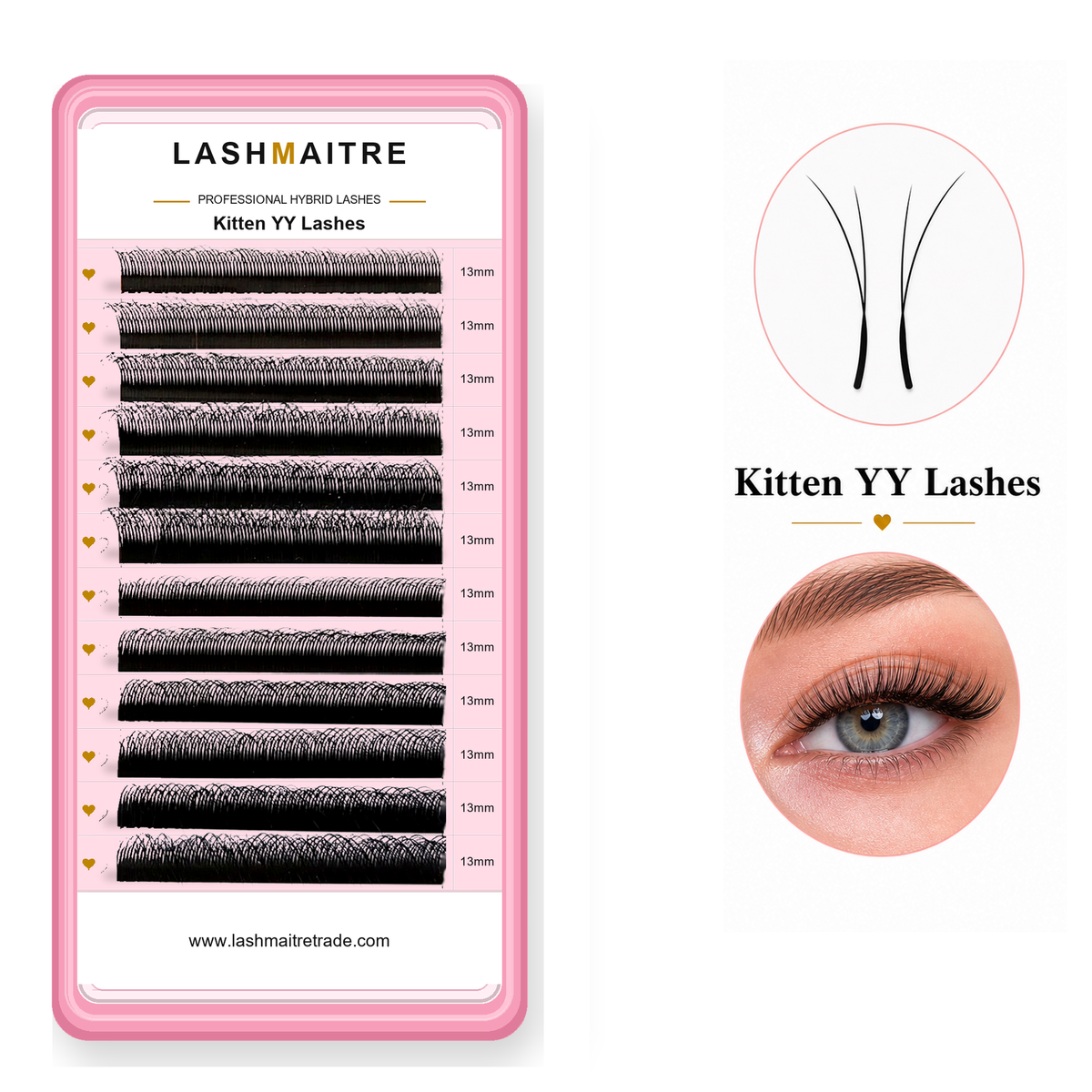
What are kitten eye lash extensions?
Kitten eye lash extensions use a gradual outward progression, an earlier outer-zone peak and a short step-down at the final corner. That taper is the main visual difference between a controlled kitten direction and an extreme outer-heavy map.
The useful consultation question is not “Which fixed map should I copy?” It is “Where should the visual peak sit, and how much taper will keep the outer corner supported?” Eye spacing, outer-corner angle, visible lid space and natural-lash direction can all change how the same drawing appears once applied.
- Silhouette: soft outward movement rather than maximum outer length.
- Peak: placed before the final corner, not automatically on the last lash.
- Taper: a controlled reduction after the peak.
- Texture: classic, hybrid, wispy or volume can sit over the same basic direction.
Kitten vs cat eye, squirrel and doll eye lashes
Map names describe visual direction, not a universal set of millimeters. Use the table to compare the intended silhouette, then ask the artist to mark the real peak and taper for your eyes.
| Direction | Visual peak | Outer finish | Useful when the goal is |
|---|---|---|---|
| Kitten eye | Before the final corner | Short controlled taper | Soft elongation with a supported edge |
| Stronger cat eye | Farther outward | More outer emphasis | A more dramatic lateral direction when suitable |
| Squirrel | Earlier, around the outer third | More visible step-down | Lift before the corner with a clearer taper |
| Doll/open eye | Nearer the center | Shorter outer zone | Center openness rather than elongation |
For a broader comparison, read cat eye vs doll eye lash extensions. If the peak needs to sit earlier and the step-down should be more pronounced, use the squirrel eye lash extension guide. The round-eye style guide explains why eye-shape suitability must remain separate from the map name.
How to plan a kitten eye lash map
Begin with zones rather than a copied number sequence. The inner zone establishes a comfortable start, the transition zone builds direction, the peak zone creates the highest visual point and the taper protects the final outer section from looking heavy.
| Zone | Planning goal | What the artist should check |
|---|---|---|
| Inner | Short, clean beginning | Comfort, natural-lash direction and smooth transition |
| Middle | Controlled progression | Visible lid space and consistency between both eyes |
| Pre-corner peak | Soft outward lift | Exact peak position, curl profile and supported length |
| Outer taper | Reduce length after the peak | Outer-lash strength and whether the finish remains lifted |
A mixed tray can help test neighboring lengths before a repeatable map is established. Use the 8–15mm lash extension length chart as a planning reference, not as an automatic prescription.
Choose curl, length and density separately
No curl letter is automatically “best” for a kitten eye. C curl can produce a softer visible curve, while D curl can create stronger lift when it suits the natural-lash direction and available lid space. Manufacturer profiles vary, so the artist should inspect the actual tray rather than relying on the letter alone.
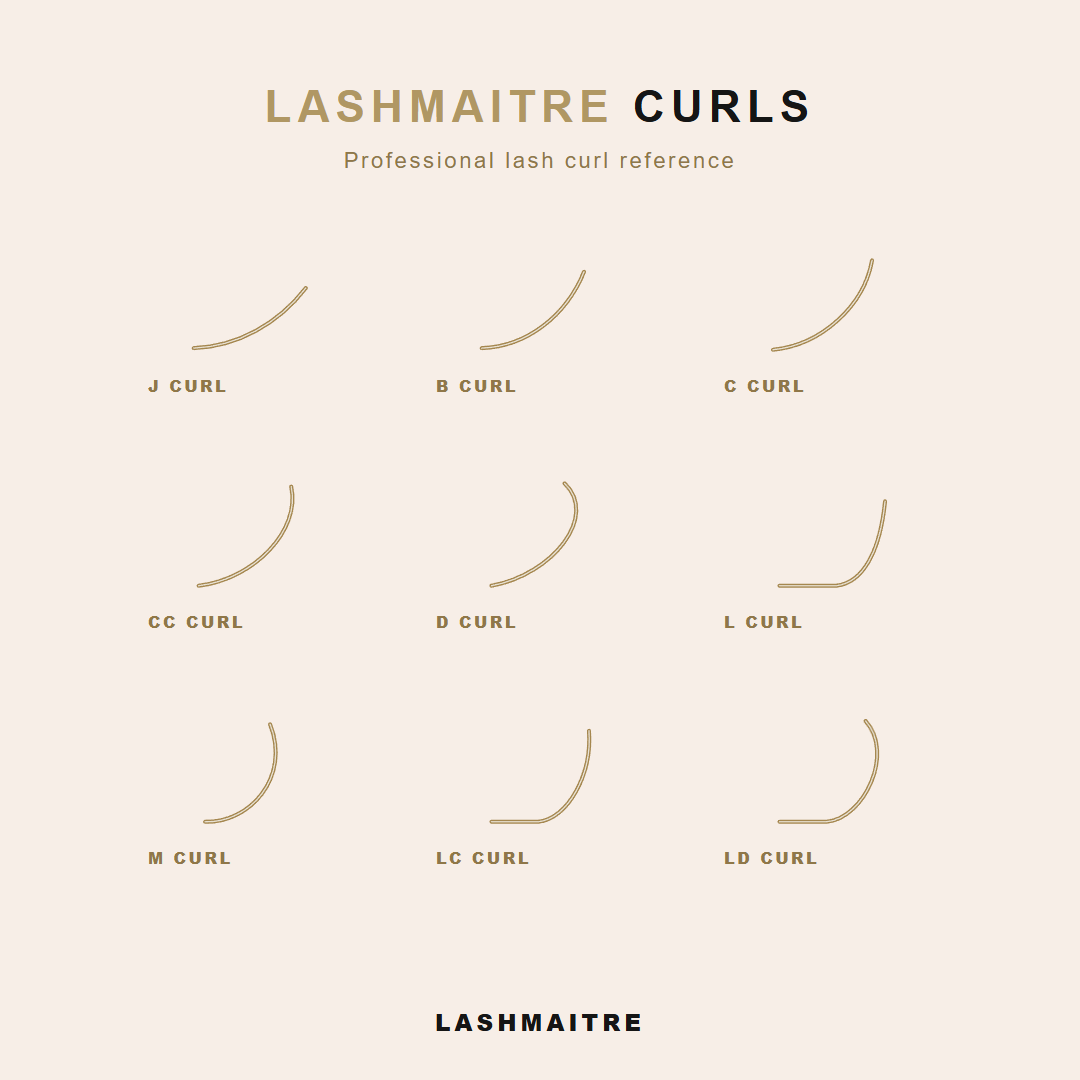
Length creates the progression, curl changes the visible lift and density changes the visual weight. Increasing all three at once can hide which variable produced the result. A clearer consultation records them separately:
- Curl: supplier name plus a real profile image.
- Length: zone-by-zone sequence, including the peak and final taper.
- Construction: classic, hybrid, YY or volume.
- Density: the intended finish, not just a trend label.
- Result: front and side photos under consistent lighting.
Classic, hybrid, wispy or volume kitten lashes?
“Kitten” describes the silhouette. “Classic,” “hybrid” and “volume” describe construction. A classic kitten set can keep separation and definition. A hybrid version can add mixed texture. Wispy styling adds controlled longer pieces over the underlying map. Volume can create softer coverage or more fullness, depending on the fan plan.
Keep the base silhouette clear before adding texture. If the spikes or fans become the only visible feature, the pre-corner peak and taper can disappear.
Choose a tray that supports the recorded map
For first-time map testing, mixed-length lash trays make it easier to compare adjacent lengths without opening many cases. Once the same map is repeated, single-length refills can replace the rows used fastest.
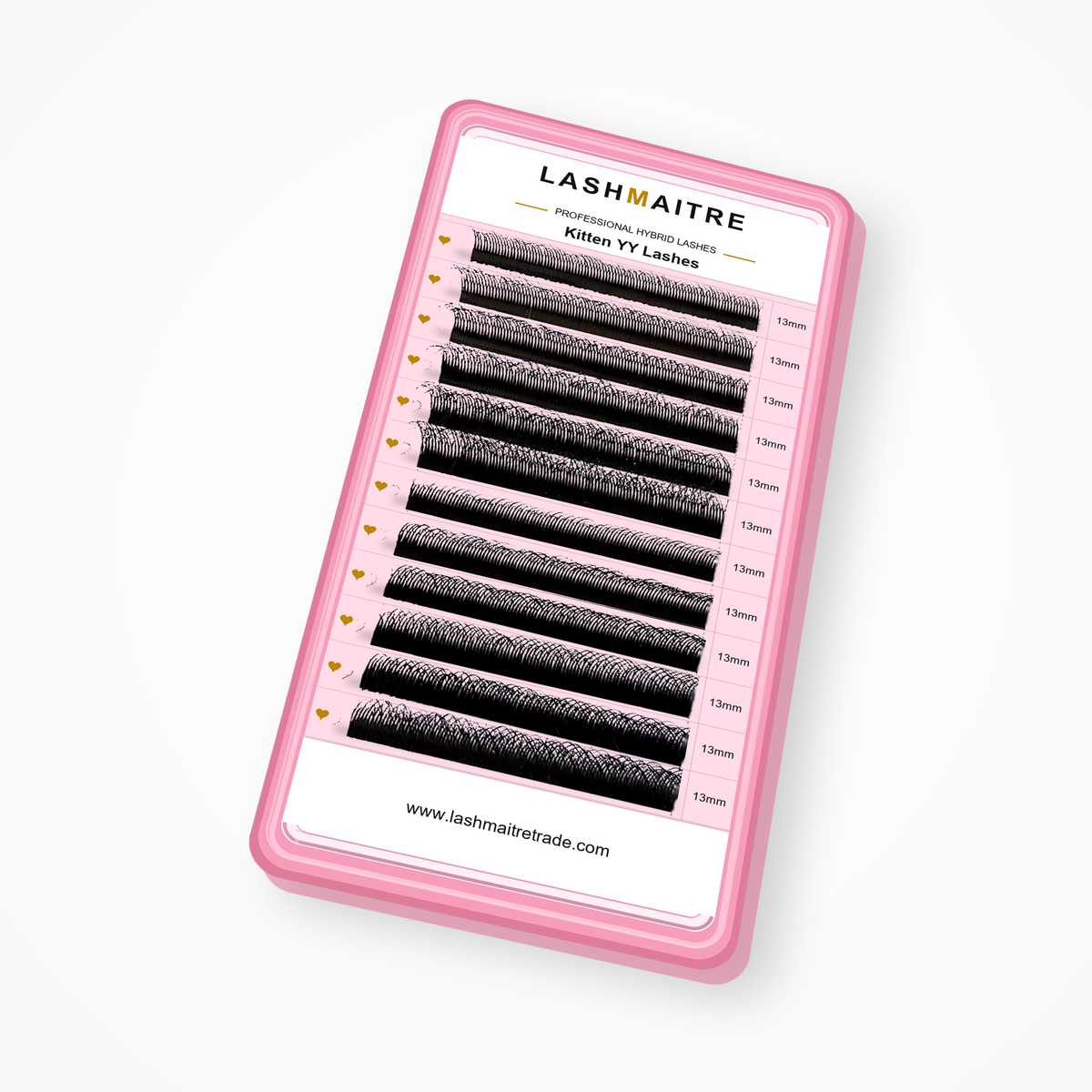
Verified LASHMAITRE product route
LASHMAITRE Kitten YY Lashes are listed at 0.07mm with C and D curl options, single lengths from 8mm to 15mm and an 8–15mm mix. Use them when a soft YY texture matches the service plan; the product name does not replace a professional map assessment.
Consultation checklist before choosing the map
- Define the desired effect: soft elongation, stronger outer drama, earlier lift or center openness.
- Mark the proposed peak on both eyes; do not assume perfect symmetry.
- Confirm how much taper will follow the peak.
- Compare the real curl profile rather than relying only on C or D labels.
- Choose construction and density separately from the silhouette.
- Record the final zone map and the exact tray SKU for future refills.
Frequently asked questions
What are kitten eye lash extensions?
Kitten eye lash extensions create gentle outward movement with the visual peak placed before the final outer corner, followed by a controlled taper. The exact curl, length and density should be chosen after a trained lash artist assesses the natural lashes, lid space and desired effect.
What is the difference between kitten eye and cat eye lashes?
A kitten-eye direction is generally softer and peaks earlier, while a stronger cat-eye direction carries more visual length toward the outer zone. Neither name defines one universal millimeter map, so the artist should confirm where the peak and taper will sit on the individual client.
Which eye shapes suit kitten eye lash extensions?
A kitten direction can be discussed for several eye shapes when the goal is soft elongation without placing the longest fibers on the final corner. Suitability depends on eye spacing, outer-corner direction, lid space, natural-lash support and the intended result rather than the eye-shape label alone.
What curl is best for a kitten eye lash map?
There is no single best curl. C curl may create a softer profile and D curl may create stronger visible lift when appropriate, but the artist should compare the actual product profile with natural-lash direction, lid space, length and the planned peak.
What lengths are used for kitten lash mapping?
Kitten maps usually progress through shorter inner lengths, build toward a pre-corner peak and step down at the outer edge. The safe and flattering millimeters vary by client. Mixed-length trays help artists test neighboring rows, while single lengths support repeat refills after the map is recorded.
Can kitten eye lashes be classic, hybrid or volume?
Yes. Kitten describes the silhouette, while classic, hybrid and volume describe construction and texture. Decide the direction first, then choose the construction and density that suit the requested finish and the artist's professional assessment.