
Quick answer: Lash extensions for sensitive eyes may be possible for some people, but “sensitive eyes” is not one diagnosis and no adhesive, curl or lash style can guarantee a reaction-free service. Tell the artist about previous reactions and current symptoms, review the named product information, and postpone the appointment if the eye area is red, swollen, painful, infected or inflamed.
This guide is for clients considering a professional service and trained artists supporting the consultation. It does not diagnose an allergy, recommend DIY application or replace advice from an eye-care or medical professional.
Key takeaways
- “Sensitive eyes” can describe watering, irritation, a known allergy, dry-eye symptoms or an active eye-area problem; those situations need different decisions.
- Low-fume, clear, black, 0.5-second and 1-second are product or workflow descriptions—not proof that a glue is hypoallergenic.
- Ask for the exact adhesive name, ingredient information, product directions and Safety Data Sheet (SDS) when available.
- A screening or patch procedure cannot guarantee that a full or delayed reaction will not occur.
- Postpone the service when there is active infection, inflamed skin, unexplained redness, swelling, pain, discharge or vision change.
- Professional buyers can compare specifications, but the final service decision belongs to an in-person consultation and relevant healthcare advice.
In this guide
- What “sensitive eyes” can mean
- When to postpone an appointment
- Six questions to ask before booking
- Allergy, irritation and ordinary watering
- Adhesive claims that need careful reading
- 0.5-second vs 1-second professional glue
- Style and aftercare considerations
- Frequently asked questions
What does “sensitive eyes” mean before lash extensions?
“Sensitive eyes” is a useful conversation starter, not a complete health assessment. One person may mean that strong odors make the eyes water. Another may have reacted to a previous adhesive. Someone else may have active redness, inflamed skin, dry-eye symptoms or an infection that makes an eye-area cosmetic service inappropriate at that time.
Before choosing sensitive eyes lash extensions, separate three questions:
- Are there symptoms today? Redness, swelling, pain, discharge, inflamed skin or vision change should not be treated as a product-selection problem.
- Is there a known history? Tell the artist about previous adhesive, cosmetic, tape, pad or latex reactions and any relevant advice already given by a qualified clinician.
- What exact products will be used? Ask for the adhesive, tape, under-eye pad, cleanser and primer names rather than relying on broad words such as “gentle” or “sensitive.”
The U.S. Food and Drug Administration explains that false lashes, lash extensions and their adhesives are cosmetics. Its Eye Cosmetic Safety guidance advises checking ingredients, keeping products and tools clean, avoiding eye cosmetics when an eye infection is present or surrounding skin is inflamed, and stopping use if irritation occurs.
When should a lash appointment be postponed?
Postpone the service when the eye area has an active infection, inflamed or damaged skin, unexplained redness, swelling, pain or discharge. Vision changes or significant symptoms need prompt assessment by an appropriate eye-care or medical professional—not a different lash curl or faster glue.
The American Academy of Ophthalmology notes that eyelash extensions can be associated with infection, an allergic reaction to adhesive and natural-lash damage. Its eyelash extension safety guidance recommends checking the salon, technician and adhesive ingredients and contacting an ophthalmologist if a reaction develops.
Do not conceal symptoms to keep an appointment. A cosmetic service can be rescheduled; an eye-health concern should be addressed first.
Six questions to ask before booking
Use this checklist during the consultation. A clear answer is more useful than a promise that one product “works for everyone.”
| Question | What a useful answer should identify | Warning sign |
|---|---|---|
| What exact adhesive will you use? | Product name, professional-use directions and current bottle status | Only a generic claim such as “sensitive glue” |
| Can I review ingredient information or the SDS? | The named formula and current documentation | No product identity or documentation path |
| How do you screen current eye-area symptoms? | A clear postpone/referral boundary | Treating redness or swelling as normal |
| What other products touch the eye area? | Pads, tape, cleanser, primer and remover | Focusing only on glue |
| How do you control hygiene and ventilation? | Clean tools, single-client disposables where appropriate and a professional room process | Reusing contaminated items or ignoring room conditions |
| What is the response plan if symptoms begin? | Stop-service steps and appropriate referral guidance | Adding products to guess at the cause |
If you have a known latex allergy, ask about every product used around the eye area and review the named labels. The FDA's Latex in Cosmetics page explains why ingredient-label review matters and why a prior allergy should not be handled through assumptions.
Lash extension allergy vs irritation vs ordinary watering
These terms are often mixed together online, but a blog cannot diagnose which one applies.
| Observation | What it may tell the consultation | What it does not prove |
|---|---|---|
| Watering during or after a service | The eye area is responding to something in the environment or process | A specific allergy or safe product alternative |
| Burning or stinging | The service should be paused and assessed | That the client only needs a faster or slower glue |
| Swelling, persistent redness or worsening discomfort | Qualified medical or eye-care advice may be needed | Which ingredient caused the problem |
| No immediate symptoms | The appointment was tolerated at that moment | That a delayed reaction cannot occur |
Do not use online photos to self-diagnose. If symptoms are significant, persistent or worsening, contact an appropriate healthcare professional. Emergency symptoms require urgent care.
Does low-fume or clear glue mean hypoallergenic?
No. Low-fume describes one product characteristic, while clear or black describes appearance. Neither term proves that a formula is hypoallergenic or suitable for every person with sensitive eyes.
Review the full formula documentation instead of inferring safety from one label. The LASHMAITRE lash adhesive ingredients and SDS guide explains how cyanoacrylate, color and safety documentation fit into a professional buyer review. It keeps formula questions on their correct owner page rather than turning this consumer guide into an unsupported product claim.
Be cautious with statements such as:
- “safe for all sensitive eyes”;
- “allergy-free”;
- “medical grade” without a precise, verifiable basis;
- “no reaction because it is clear”;
- “safer because it dries faster.”
Those phrases can sound reassuring while hiding the information a client actually needs: the named formula, ingredient documentation, professional directions, current symptoms and a plan for what to do if a problem begins.
Is 1-second glue safer than 0.5-second glue?
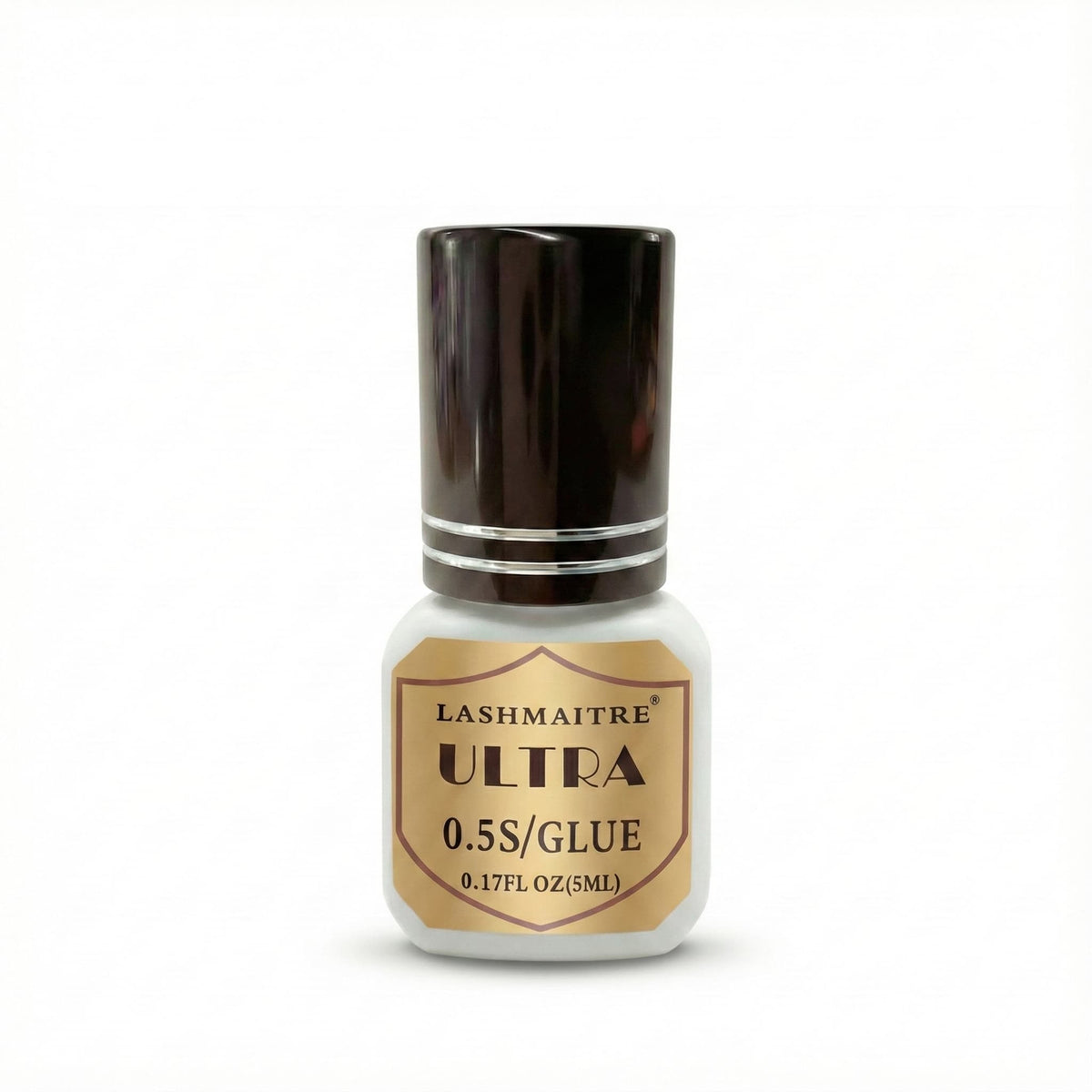
No. Dry time describes the professional working window under stated conditions; it does not establish sensitive-eye safety.
| Specification | 1-second professional glue | 0.5-second professional glue |
|---|---|---|
| Main comparison | More placement time for an artist whose rhythm matches the formula | Very fast working window for a trained artist with rapid, controlled placement |
| What to verify | Room range, viscosity, drop behavior, storage and directions | The same formula-specific checks plus whether the artist can place before the adhesive grabs |
| What the number does not prove | Hypoallergenic, low-reaction or suitable for a particular client | Hypoallergenic, low-reaction or suitable for a particular client |
Trained artists can review the Professional Lash Extension Glue — 1s Dry Time and 0.5 Second Ultra Bond Eyelash Extension Glue as named specification pages. These are professional products, not medical solutions for sensitive eyes.
The beginner lash glue dry-time guide owns the artist-speed decision. It explains why 0.5 second versus 1 second should be tested as a workflow choice rather than promoted as a safety ranking.
Compare professional adhesive specifications, not promises
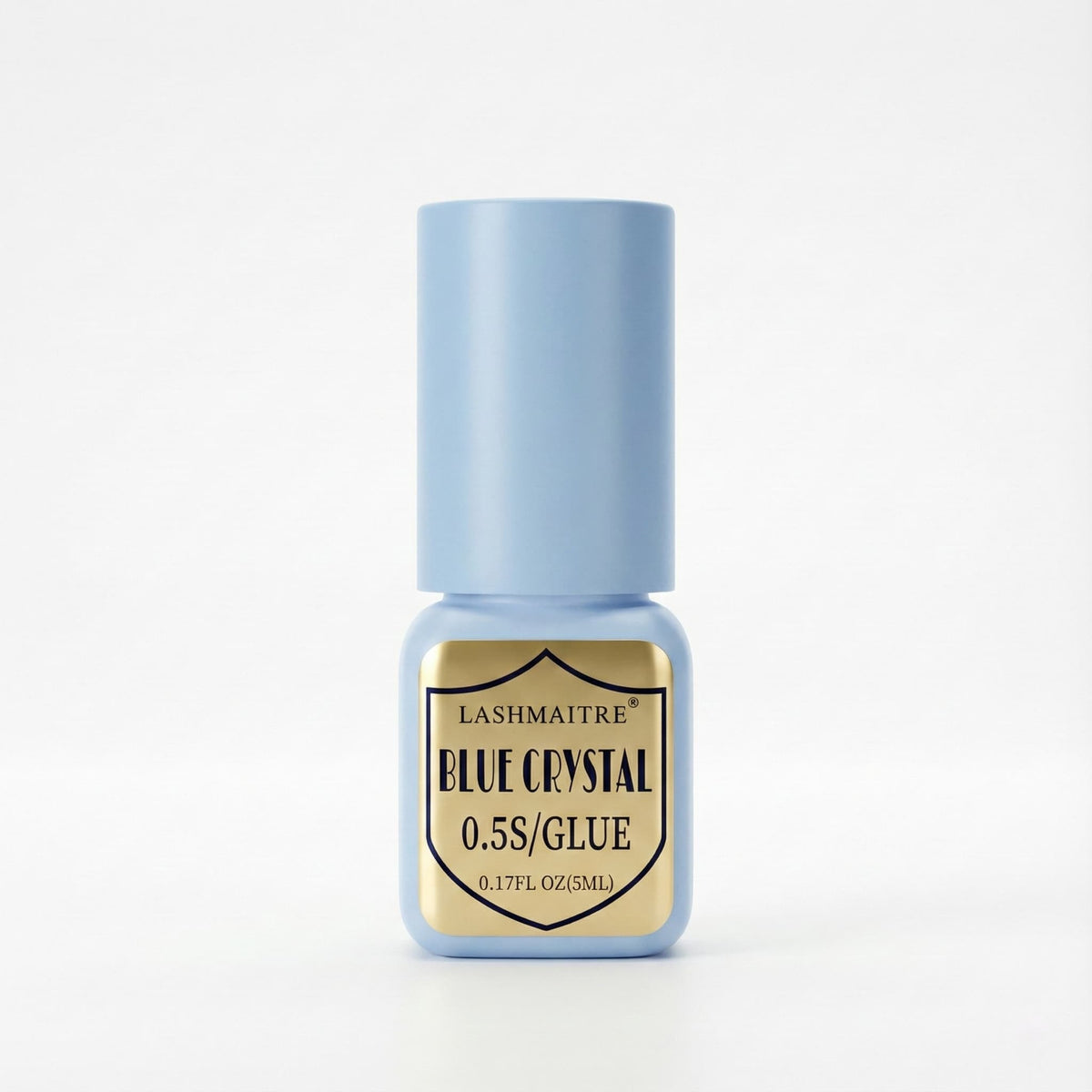
For professional purchasing, use the Lash Glue & Liquids collection to compare the current product family. Record the exact formula, bottle size, dry time, color, room range, viscosity, storage, shelf-life wording and documentation before sample testing.
A practical review separates four decisions:
- Client suitability: current symptoms, history and relevant medical advice.
- Formula documentation: ingredients, directions, SDS and supplier claims.
- Artist workflow: placement speed, room conditions, glue amount and technique.
- Purchase decision: one named sample evaluated under controlled professional conditions.
Do not collapse these into one “best lash extension glue for sensitive eyes” label. A bottle may match an artist's speed and still not be suitable for a particular client.
Does lash style change sensitivity risk?
Classic, hybrid and volume describe construction and visual density. They do not make an adhesive allergy disappear. A lighter-looking set can still use the same eye-area products, while a fuller set does not automatically cause a reaction.
The trained artist should assess the natural lashes, choose appropriate weight and maintain safe separation and placement. Discuss the desired look only after the health and product questions are clear. If the appointment proceeds, avoid using “shorter,” “classic” or “light volume” as a substitute for reviewing adhesive and contact products.
Aftercare for a client who describes sensitive eyes
Follow the named product and artist instructions. Do not add an unapproved cleanser, oil, remover or eye-area cosmetic to “calm” a reaction without qualified guidance.
The LASHMAITRE lash extension aftercare guide covers routine cleaning and maintenance for a tolerated service. It is not a treatment guide. New pain, swelling, discharge, persistent redness or vision changes belong with a qualified medical or eye-care professional.
Keep a simple service record with:
- appointment date and time;
- adhesive and other eye-area product names;
- lot or batch information when available;
- when any symptom began;
- what steps were taken;
- who was contacted for advice.
That record is more useful than guessing which single product caused a problem.
Frequently asked questions
Can you get lash extensions with sensitive eyes?
Possibly, but sensitive eyes is not one diagnosis and no lash service can be guaranteed reaction-free. Tell the artist about previous reactions, current symptoms and relevant medical advice. Postpone the appointment if the eye area is red, swollen, painful, infected or inflamed, and seek qualified care when symptoms are concerning.
Does low-fume lash glue mean hypoallergenic?
No. Low-fume describes one handling characteristic; it does not prove that an adhesive is hypoallergenic or suitable for every sensitive client. Review the full ingredient information, product directions and SDS where available, and avoid turning a marketing term into a medical or safety guarantee.
Is 1-second lash glue safer than 0.5-second glue for sensitive eyes?
Dry time does not establish safety. A 1-second and a 0.5-second adhesive mainly describe different professional working speeds under stated conditions. The artist must compare formula documentation, room conditions and technique separately; neither speed should be promoted as safe for sensitive eyes without product-specific evidence.
Can a patch test guarantee that lash extensions will not cause a reaction?
No. A salon may use a product-specific screening or patch procedure when appropriate, but a limited test cannot guarantee that a later or full-service reaction will not occur. Follow the named product instructions and local professional rules, and obtain medical advice for known allergies or previous significant reactions.
When should a lash appointment be postponed?
Postpone an eye-area cosmetic service when there is active infection, inflamed skin, unexplained redness, swelling, pain, discharge or a concerning recent reaction. Vision changes or significant symptoms need prompt assessment by an appropriate eye-care or medical professional rather than a cosmetic product recommendation.
What should you do if irritation starts after lash extensions?
Do not add another cosmetic product to guess at the cause. Contact the lash professional, stop using the suspected product and seek qualified medical or eye-care advice when symptoms are significant, persistent or include pain, swelling, discharge or vision changes. Emergency symptoms require urgent care.
Make the next decision from evidence
Lash extensions for sensitive eyes should begin with symptoms, history and exact product information—not a reassuring marketing label. If the eye area is healthy and the service remains appropriate after consultation, compare the trained artist's process and the named formula documentation before discussing style.
Professional buyers can review Lash Glue & Liquids and the lash adhesive ingredients guide. Clients with active or concerning symptoms should postpone the cosmetic decision and seek qualified advice.
Sources and evidence boundaries
- U.S. Food and Drug Administration — Eye Cosmetic Safety, accessed October 5, 2026.
- American Academy of Ophthalmology — Eyelash Extension Facts and Safety, accessed October 5, 2026.
- U.S. Food and Drug Administration — Latex in Cosmetics, accessed October 5, 2026.
- LASHMAITRE C-end product and collection specifications, checked October 5, 2026.
This article does not diagnose allergy or irritation, prescribe treatment, promise a reaction-free result or replace the directions for any named product.