Quick Answer
Short eyelash extensions use a deliberately restrained length map for subtle sets, compact transitions or shorter zones such as the inner corner. “Short” is relative to the natural lashes, curl and eye area; it is not one universal millimeter cutoff. Salons should record the full map and separate length from coverage, because a short full set and a half set solve different service needs.
| Decision point | Short-set question | Buyer record |
|---|---|---|
| Length | Which zones need the shortest rows? | Millimeters by inner, middle and outer zone |
| Curl | How does curl change visible projection? | Supplier curl profile and side photo |
| Coverage | Full coverage or partial coverage? | Percentage/zone definition in service menu |
| Format | Classic or light volume? | Diameter, fan construction and density |
| Inventory | Mixed or single-length trays? | Row-use count and reorder point |
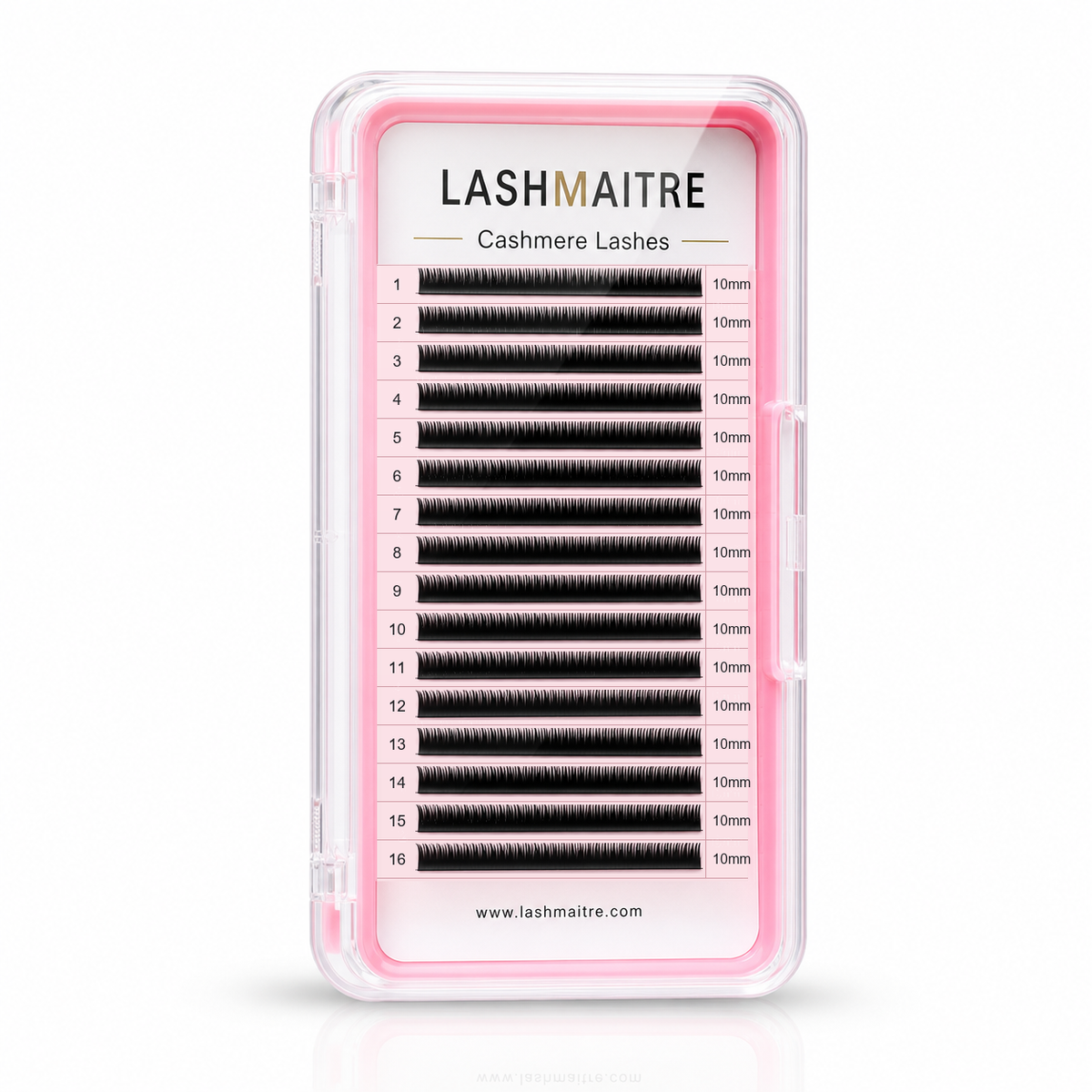
Table of Contents
- What counts as short
- Short Classic vs light volume
- Length transitions by zone
- Curl and visible length
- Mixed vs single-length trays
- Inventory worksheet
- FAQ
What Counts as Short Eyelash Extensions?
There is no universal length that makes every extension “short.” Professional product ranges can include very short rows for inner corners, lower lashes or compact natural maps. Industry examples include 5mm, 6mm and 7mm products, but availability varies by supplier and those numbers are not a recommendation for every client.
The better definition is functional: a short set keeps the visible extension length intentionally restrained relative to the natural lashes, chosen curl and desired result. A client may want a subtle full set, a short kitten map or only a clean inner-corner transition. Each requires a different tray plan.
Do not confuse short extensions with extensions on short natural lashes. The first describes the selected extension length. The second describes the natural-lash condition and requires professional assessment before any product is selected.
Short Classic vs Short Light-Volume Sets
Classic and light-volume trays can both support a short-looking result, but they create different coverage and inventory needs.
| Factor | Short Classic | Short Light Volume |
|---|---|---|
| Construction | One extension per suitable isolated natural lash | Fine-fiber fan per suitable isolated natural lash |
| Visual direction | Clean separation and definition | Softer coverage and controlled density |
| Key sample variable | Diameter, curl and finish | Diameter, fan count, width, base and stem |
| Inventory focus | Short single fibers and mixed lengths | Short fine-fiber rows or suitable prepared fans |
| Approval risk | Too much visible thickness | Too much density or inconsistent fan shape |
Use Classic Lash Trays when the service promise centers on individual definition. Use Volume Lash Trays when the salon needs fine fibers for light, controlled fans. Neither format is automatically better or safer; suitability depends on the complete design and professional assessment.
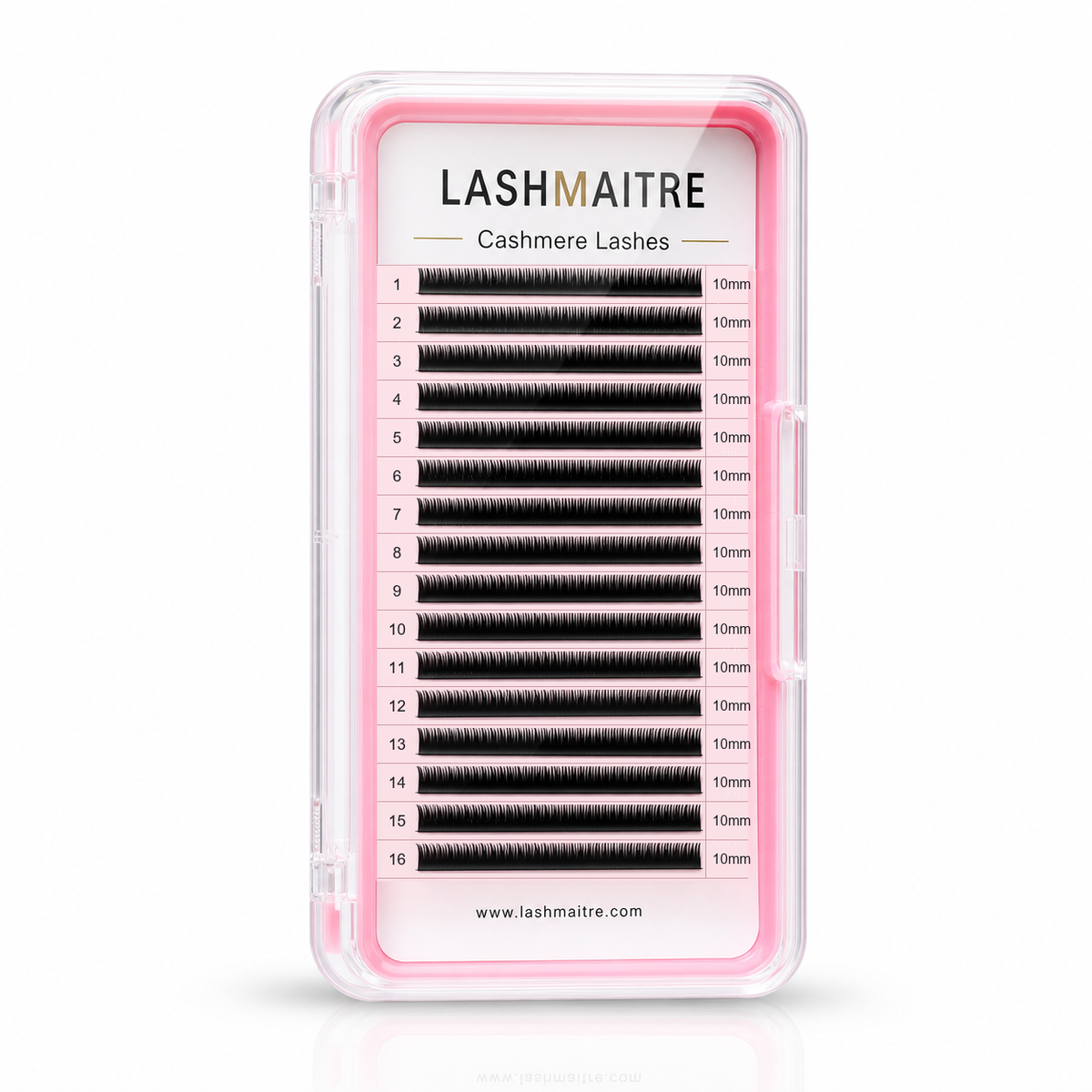
Short Lash Extension Mapping by Zone
A natural-looking short map still needs transitions. Moving from a very short inner corner directly to a much longer middle zone can create an obvious step. Buyers should ensure that the tray contains neighboring lengths, not only the shortest and longest rows.
| Zone | Planning goal | Inventory question |
|---|---|---|
| Inner | Compact, comfortable visual transition | Are enough short rows included? |
| Inner-middle | Smooth increase | Is the neighboring length available? |
| Center | Controlled peak or even natural line | Does curl increase visible height? |
| Outer-middle | Shape definition | Is the map kitten, natural or open? |
| Outer | Finish without dragging the visual line | Does the length need to step down? |
The 8–15mm Lash Extension Length Chart explains the broader length-planning framework. A short-set article should not repeat every long map; it should help the buyer identify where compact rows are consumed and how the transitions are recorded.
Curl Changes the Visible Length
Two extensions with the same labeled length can look different when their curl profiles differ. A stronger curl may project upward sooner, while a softer curl may appear to extend farther forward. Supplier curl names are not guaranteed to match perfectly, so compare the physical profile rather than relying only on C, CC or D labels.
Photograph each candidate curl from the side against the same reference card. Check the base direction, transition into the curve and visible height at the same labeled length. Save that image with the batch record so reorders can be compared with the approved sample.
For clients with straight or downward natural lashes, use the Straight Lashes Curl Guide as a separate application reference. Do not assume a stronger curl is always the correct answer.
Short Length Is Not the Same as Half Coverage
A short full set can cover the salon’s normal proportion of suitable natural lashes while keeping the map restrained. A half set uses lower coverage or a defined portion of the lash line. The two services may both look subtle, but their material use, timing and refill policy are different.
The Half Set Lash Extensions guide owns the coverage decision. In the short-set service description, state the intended coverage separately from the maximum length. This prevents clients and staff from treating “short,” “natural” and “half set” as interchangeable promises.
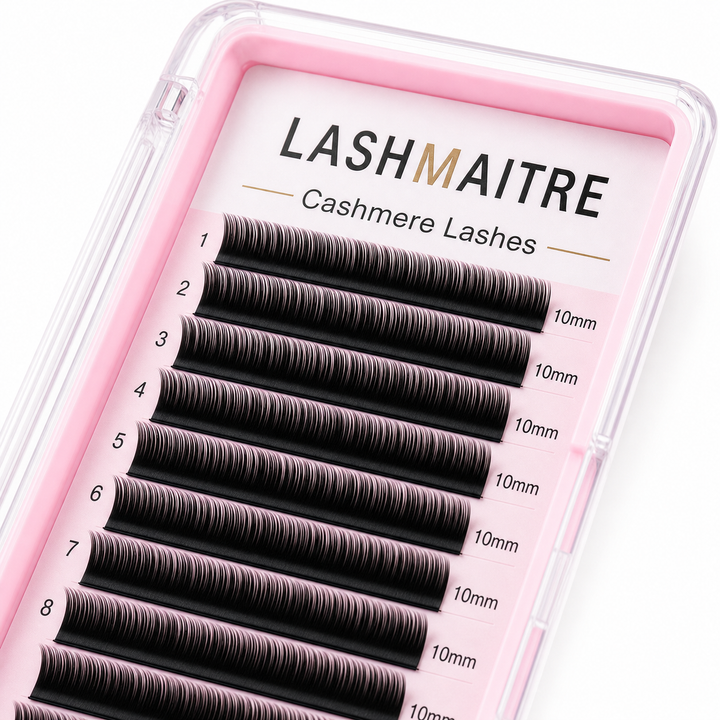
Mixed-Length vs Single-Length Tray Planning
A Mixed-Length Lash Tray is useful for testing a compact map because the salon can observe which rows are consumed first. Single-length trays become useful after demand is documented, especially when the same short row is needed across many services.
Use a simple inventory worksheet for at least five controlled sets:
- Record the service type and approved map.
- Count the starting rows or strips by length.
- Note which lengths were used in each zone.
- Record whether the row ran out before the rest of the tray.
- Separate Classic, volume and prepared-fan consumption.
- Calculate the likely reorder point for fast-moving lengths.
- Keep slow-moving rows in mixed trays until demand is proven.
This process is more reliable than copying a competitor’s assortment. A manufacturer example may offer 5–7mm products, while another brand may begin its practical mix at a different length. The salon’s service data should decide the final SKU range.
A Short-Lash Sample Approval Checklist
- Confirm labeled length, curl, diameter and finish.
- Compare the physical length against an approved reference.
- Check curl consistency across the shortest and neighboring rows.
- Test strip pickup and whether short fibers remain organized.
- Build inner, middle and outer transitions on a worksheet.
- Record Classic or fan construction separately.
- Apply only after professional assessment of suitable natural lashes.
- Photograph the finished map under consistent lighting.
- Count row consumption across at least five controlled services.
- Save supplier, batch, sample date and reorder notes.
Eye-area products require careful use. The U.S. Food and Drug Administration advises consumers to stop using an eye cosmetic if it causes irritation and to avoid using eye cosmetics when the eye area is infected or inflamed. See FDA Eye Cosmetic Safety.
Common Short-Lash Planning Mistakes
- Defining short with one universal millimeter number.
- Confusing short extension length with short natural lashes.
- Skipping neighboring lengths and creating abrupt transitions.
- Assuming shorter automatically means lighter without checking diameter or fan construction.
- Using age or eye shape as the only product-selection rule.
- Buying deep single-length inventory before measuring mixed-tray use.
FAQ
What are short eyelash extensions?
Short eyelash extensions use restrained lengths to create a subtle set or support compact zones such as the inner corner. “Short” depends on the natural lashes, curl and complete map. Salons should document millimeters by zone instead of treating one length as a universal definition.
What length is considered short for lash extensions?
There is no universal cutoff. Professional ranges may include 5mm, 6mm or 7mm rows, but product availability and client suitability vary. The artist should choose lengths after assessing the natural lashes and desired map, then record the approved zone-by-zone specification.
Are short lash extensions only for natural-looking sets?
No. Short lengths can support natural sets, inner-corner transitions, compact textured maps and controlled volume. The final look also depends on curl, diameter, fan construction, coverage and layering. Length alone does not determine whether a set appears natural or dramatic.
Should a short set use Classic or volume lashes?
Either format may work when professionally appropriate. Classic trays create separated individual definition, while fine volume fibers can create softer coverage. Compare the complete design, including diameter, fan count, width and natural-lash suitability, rather than choosing from the service name alone.
Should salons buy mixed or single-length trays first?
Mixed trays are usually practical for sample mapping because they reveal which short and transition rows are consumed most often. After several controlled services, add single-length trays for proven fast-moving rows. This reduces dead stock and keeps the first order focused.
Conclusion
Strong short eyelash extensions begin with a documented map, not a universal length rule. Separate extension length from coverage, compare curl profiles and track row use before expanding inventory. Start with LASHMAITRE Classic Lash Trays or mixed-length options, test the compact transitions and save the approved sample for reorders.
Sources
- Shortest Lash Extension Length: Insights from a Manufacturer, HeyMe Beauty, accessed July 20, 2026.
- Individual Short Eyelash Extensions 5–7mm, Nagaraku, accessed July 20, 2026.
- FDA Eye Cosmetic Safety, U.S. Food and Drug Administration, accessed July 20, 2026.
Compare Trays for Short Lash Extension Maps
Choose the construction first, then confirm the available curl and length mix on the product page before ordering.
Shop 0.10mm Cashmere Classic Trays · Shop 0.05mm Cashmere Volume Trays · Compare Mixed-Length Lash Trays